Freeze
Seams Opening After Winter
- You See
Drips that start in late winter near seams or drains.
- What It Means
Water seeped into a seam or crack, froze, and widened the gap. A matching patch or a reweld closes it once the surface is dry.

As an Erlanger commercial roof repair contractor, we trace leaks to their source and repair flat, metal, and industrial roofs on working buildings.
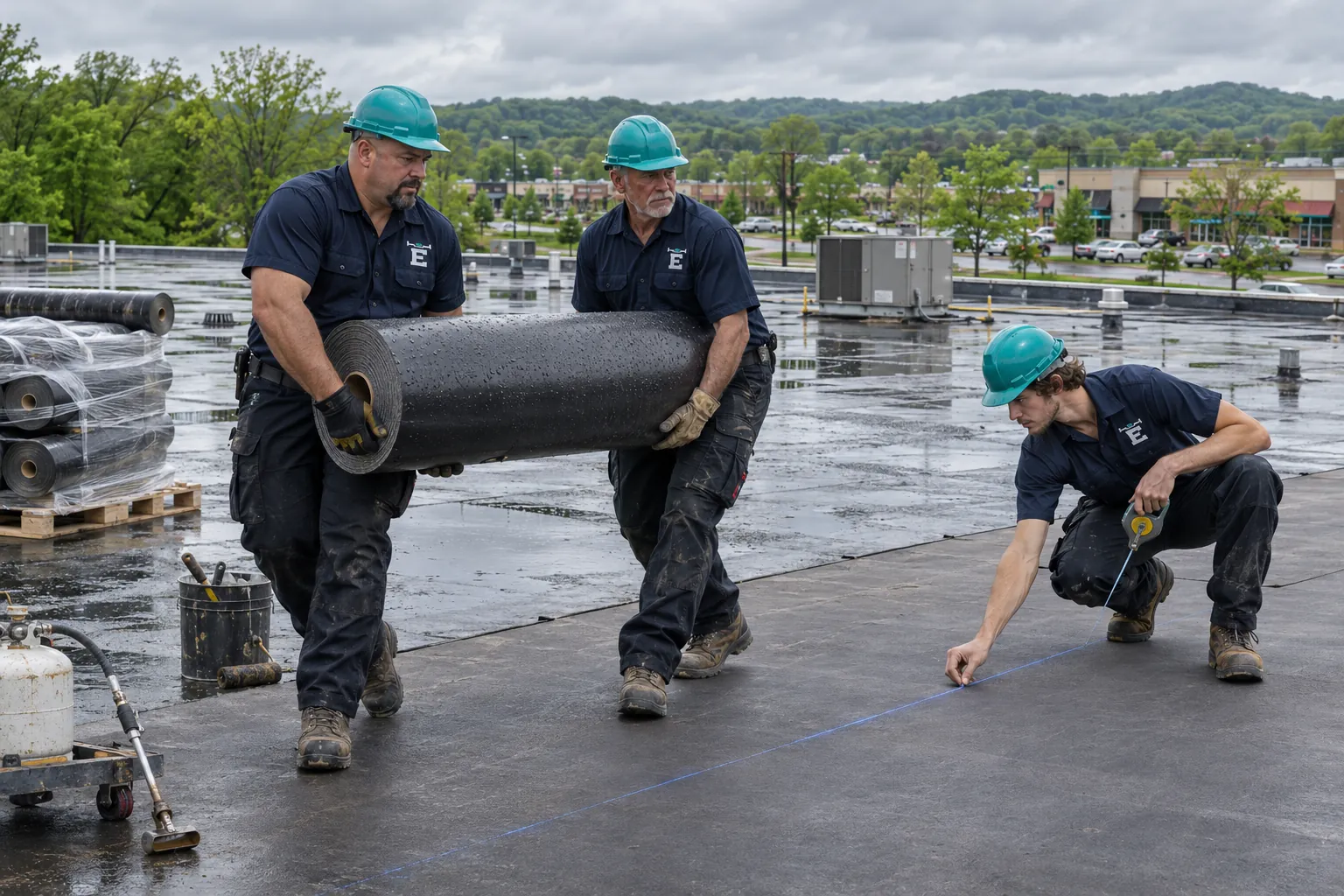
An Erlanger commercial roof repair contractor fixes the part of the roof that failed, so the rest of a dry, working roof stays in service.
Closing an open lap or a split seam early keeps water out of the insulation boards, and dry boards are what make a repair worth doing instead of a tear-off.
SeamsRebuilt base flashing at rooftop unit curbs stops the drips that land on desks, shelving, and inventory below, which is where most of the cost of a leak shows up.
CurbsA drain with a reset clamping ring and a clean strainer moves water off a flat roof again, so it stops sitting against seams for days after rain.
DrainsRust at a deck flute or a soft spot near a pipe gets found while it is still one bay, before long-term leaking turns it into a structural job.
DeckRefastened edge metal and resealed coping joints keep the perimeter tight, since wind starts lifting a roof at its corners and edges first.
EdgesMost repair calls trace back to a handful of causes. Each card pairs what you notice with what it points to on the roof.
Drips that start in late winter near seams or drains.
Water seeped into a seam or crack, froze, and widened the gap. A matching patch or a reweld closes it once the surface is dry.
Bent coping or loose edge metal after a storm.
Wind works the perimeter first. Refastening and resealing the edge keeps the membrane from peeling back across the field.
Stains below rooftop units or exhaust fans.
Base flashing at the curb has shrunk or cracked at the corners, or the unit itself lets water in. Both get checked.
Rust streaks running down from screw heads on a metal roof.
Panel movement loosened the screws and dried the washers. New screws, often one size larger, seal the holes again.
A wet ceiling tile under a rooftop service path.
Dropped tools and heavy boots puncture membrane near equipment. A matching patch closes it, and walkway pads protect the spot afterward.
Water still standing two days after rain.
Leaves, gravel, or a loose strainer slowed the drain. Clearing it and resetting the clamping ring gets water moving before it finds a seam.
Each card starts with what brings an owner to that service, then lists the repairs it covers.
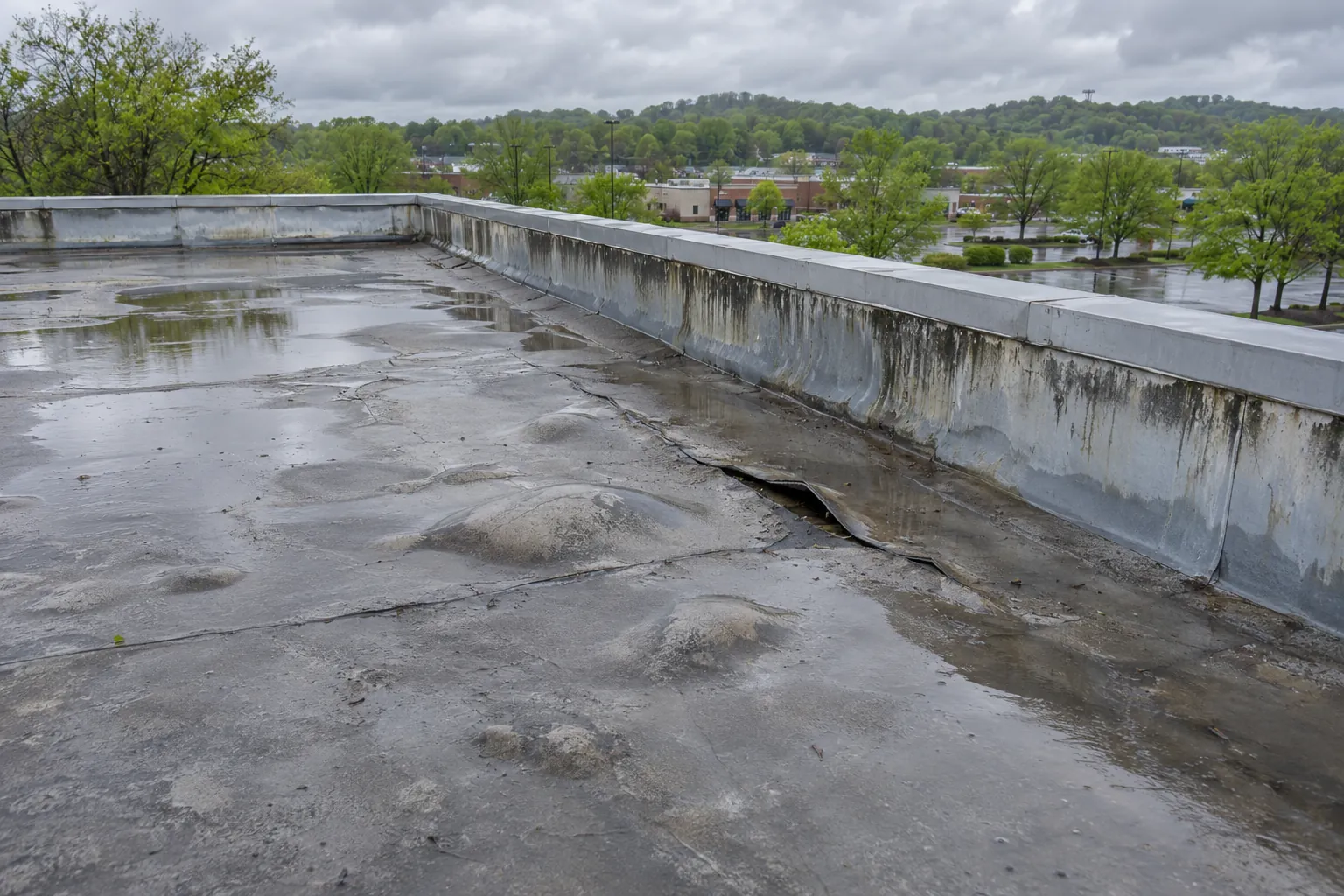
Membrane roofs on offices, strip centers, and warehouses fail at their details. We reweld TPO seams, retape EPDM laps, cut out blisters, and replace wet insulation in the areas that test wet.
Typical Repairs
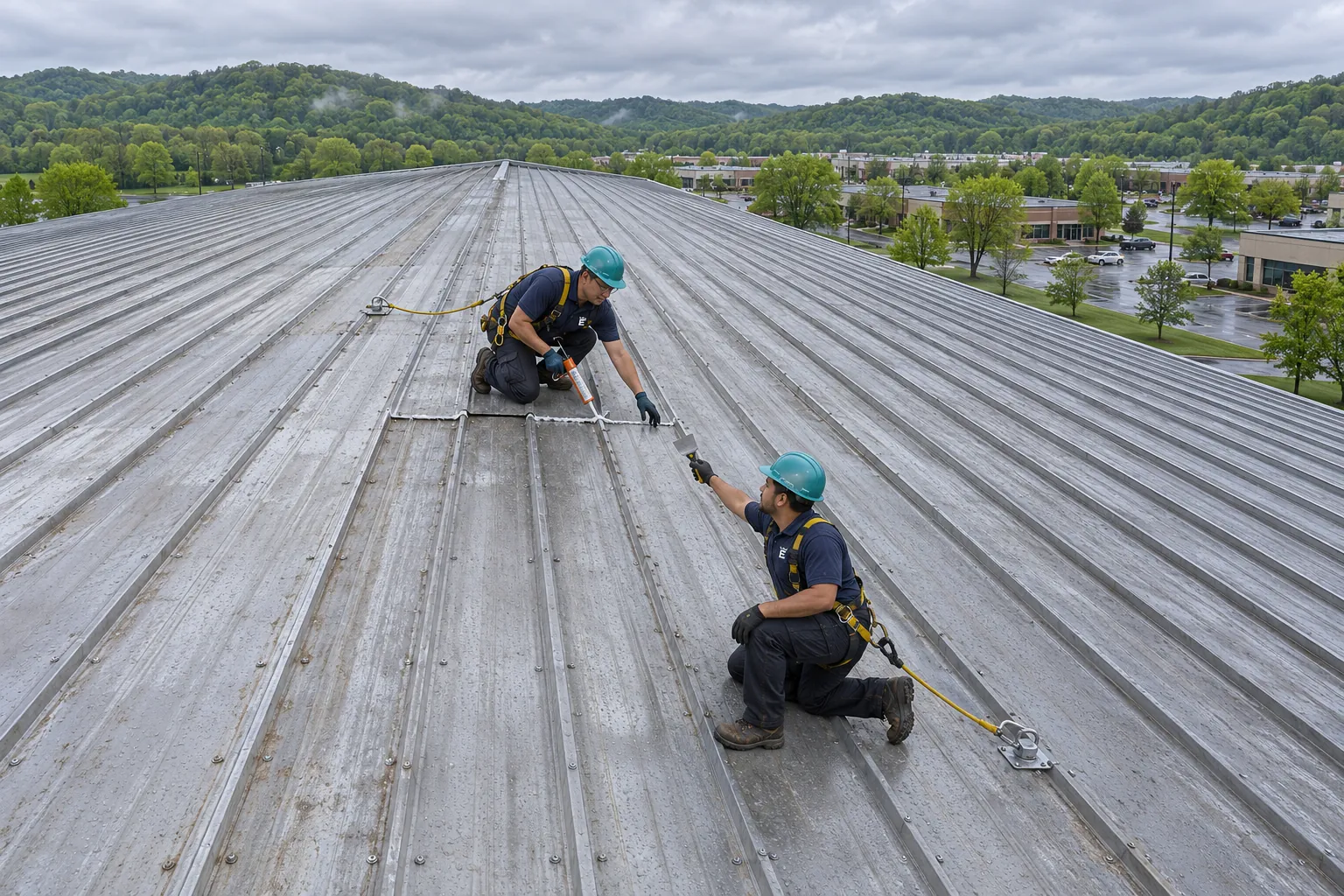
Exposed-fastener R-panel and PBR roofs leak where they are sealed, rarely through the steel itself. Screws, washers, end laps, ridge closures, and gutters are where repair time goes.
Typical Repairs
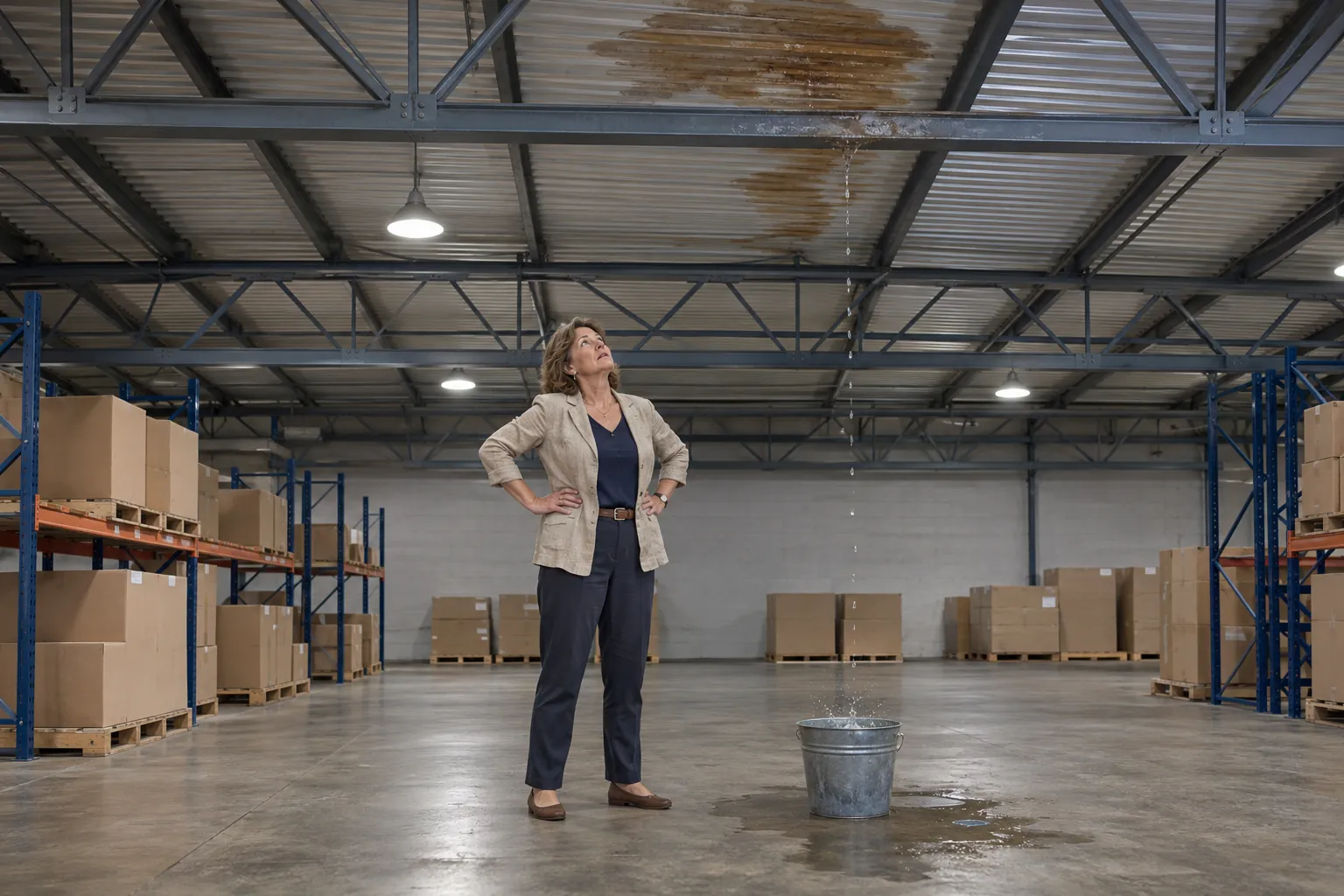
Leak repair starts at the interior stain and works uphill on the roof. We check every curb, pipe boot, pitch pan, and seam in the water's path before patching anything.
Typical Repairs
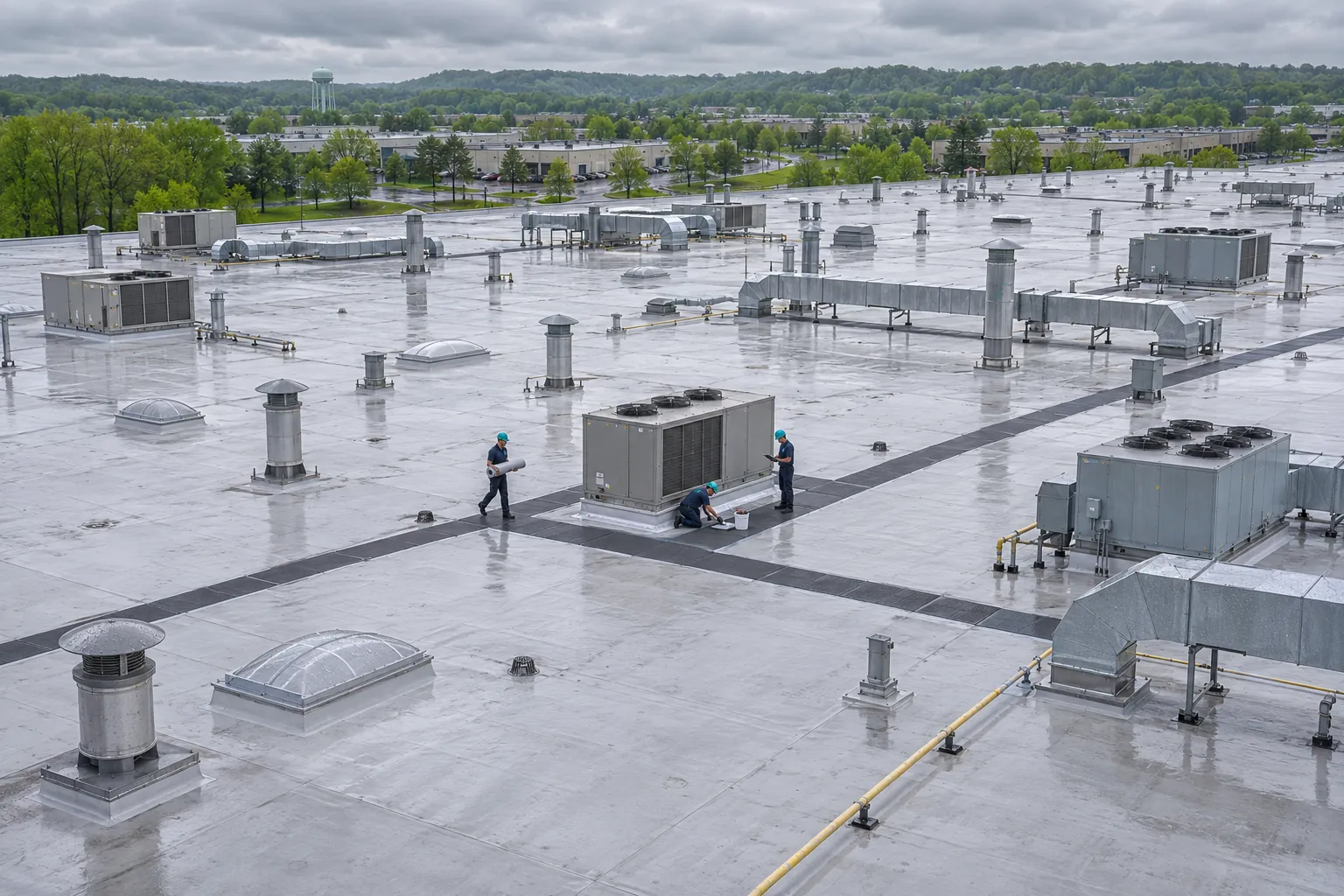
Plant roofs take grease, vibration, and heavy service traffic. Repairs cut out damaged membrane, rebuild flashing at equipment rails, and clear drains, scheduled around hot-work permits and shifts.
Typical Repairs
Move stock and equipment out of the drip, catch the water, and call. These notes help the crew head straight to the right part of the roof.
Every visit follows the water from inside the building to the spot where it gets in.
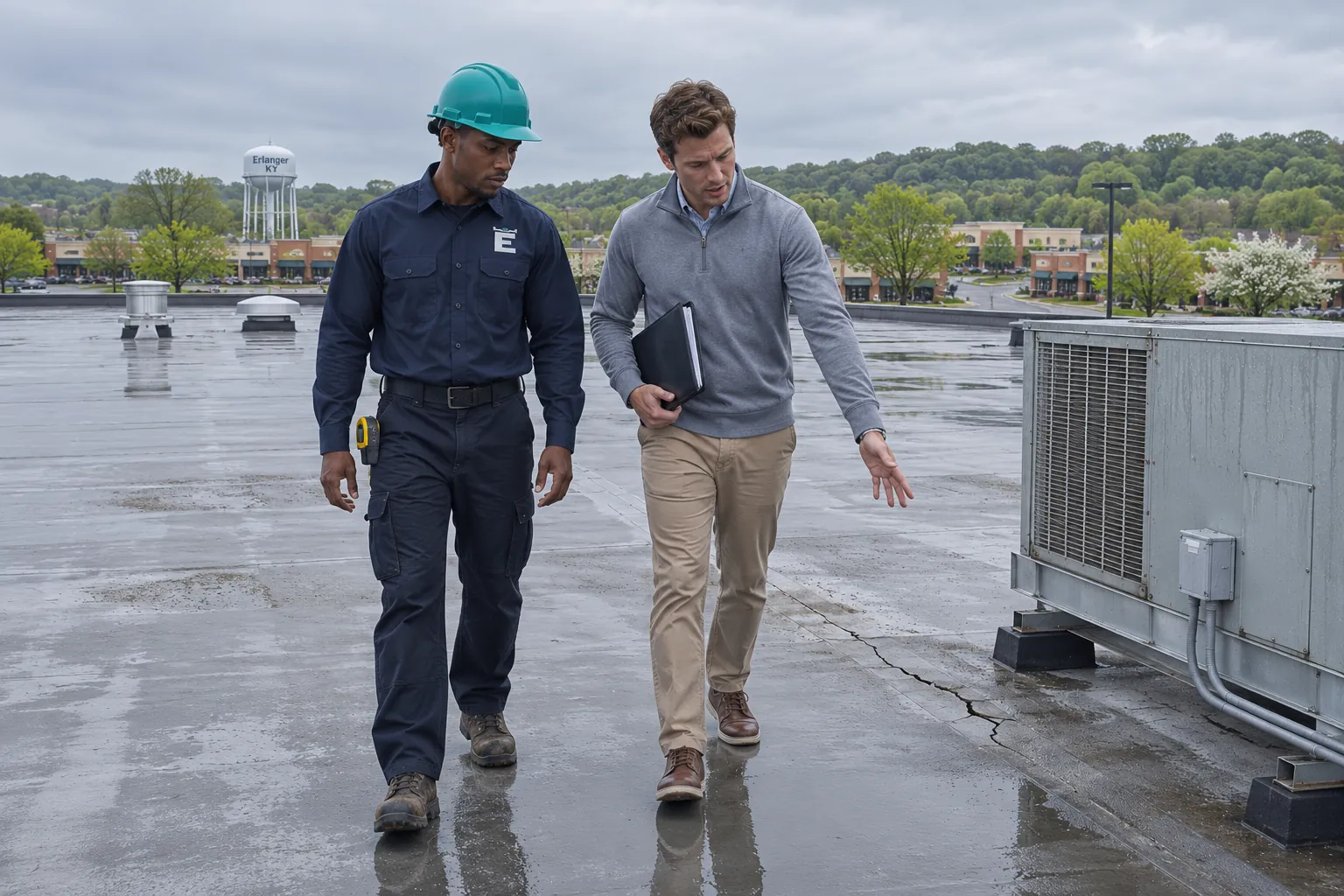
We walk the interior under each stain first, then go up and check every seam, curb, drain, and edge that sits above and uphill of it.
Moisture meters, core cuts, or a controlled water test narrow the source when it hides. Wet insulation gets mapped so the repair covers all of it.
TPO gets a welded TPO patch, EPDM gets primer and tape, and metal panels get matching profile pieces. Mixed products are how patches come loose.
Seams are rewelded, flashing is rebuilt, screws are upsized, and drains are reset. A temporary patch from a storm call is replaced with permanent work once the surface dries.
You get photos of the problem and the finished repair, a plain explanation of the cause, and a note on any nearby area of the roof that will need attention.
Moisture under the membrane decides most of these calls. The dots show where each path tends to fit.
| Roof Condition | Repair | Restore | Replace |
|---|---|---|---|
| One or two leaks, dry insulation | Usually Fits | Rarely | Rarely |
| Aging surface, dry insulation, solid deck | Sometimes | Usually Fits | Rarely |
| Open seams in many places across the field | Sometimes | Sometimes | Sometimes |
| Wet insulation across large areas | Rarely | Rarely | Usually Fits |
| Rusted or rotted deck in several bays | Rarely | Rarely | Usually Fits |
Core cuts and moisture scans settle the borderline rows before any money is spent on the roof.
Strip centers, clinics, offices, churches, and flex buildings in these towns are where we repair roofs most. Elsewhere? Call us or send us a message.
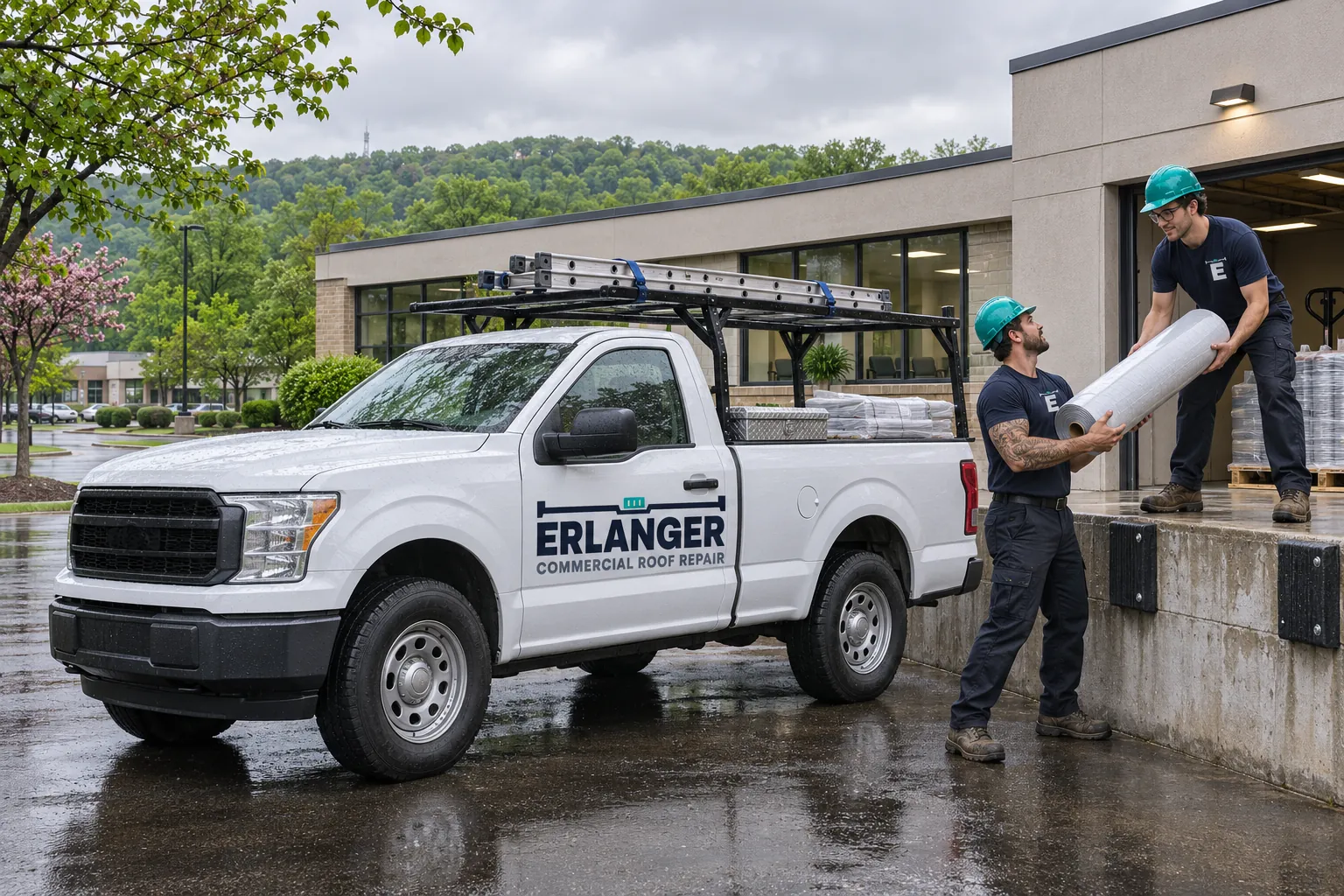
Attached storefronts along Dixie Highway share long roofs, so a leak in one shop can start over the unit next door. We trace those leaks across tenant lines and repair the source.
Elsmere Commercial Roof Repair →Short answers to what building owners ask before a repair visit.
Damage that stays in a few areas is repairable: open seams, punctures near rooftop units, cracked flashing, clogged drains, backed-out screws, and rust holes in single panels. When wet insulation spreads under large areas, the conversation turns to restoration or replacement.
Water runs along steel deck flutes, insulation joints, or purlins before it finds a way through the ceiling. A drip over a warehouse aisle can start at a pipe boot or curb forty feet upslope, so tracing checks everything above and uphill of the stain.
Edges and coping come first, because wind lifts a roof at its perimeter. Next come the membrane field for punctures and hail bruises, rooftop units for shifted panels and torn curb flashing, and drains for limbs. Dated photos help with an insurance claim.
Part of the work, yes. Temporary patches go on in cold or wet weather to stop water fast, and products rated for low temperatures handle smaller fixes. Welded seams and larger membrane sections wait for a dry surface and milder days.
When leaks keep showing up in new places, wet insulation spreads across large areas, or yearly repair spending approaches the cost of restoring or replacing the roof. A repair log kept over several seasons shows that trend, and core cuts supply the hard facts.
Yes. Most repair work happens from the roof surface, so offices, shops, and warehouses keep running below. Interior protection goes down under the work area when a cut-out or deck repair sits over occupied space or stored goods.
Tell us where the water shows up and what kind of roof sits above it. We trace it and fix the source.